

Texas Sales Guidelines
Qualification
-
Must be in an eligible energy community (MAP) or in DFW/Waco area that was an energy community until last year.
Must receive electric service from:
Oncor Electric
Centerpoint
American Electric Power (AEP)
Texas New Mexico Power (TNMP)
-
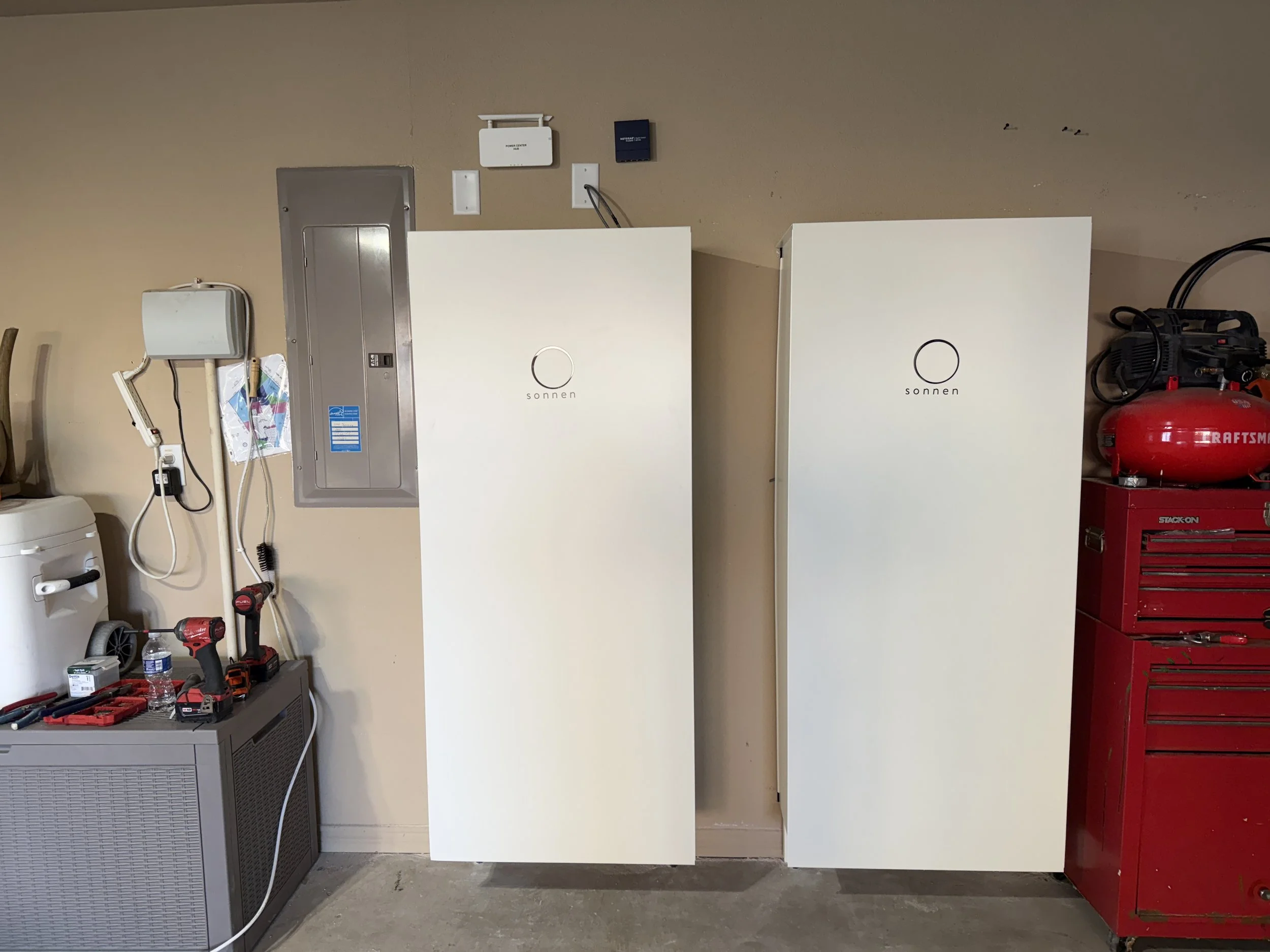
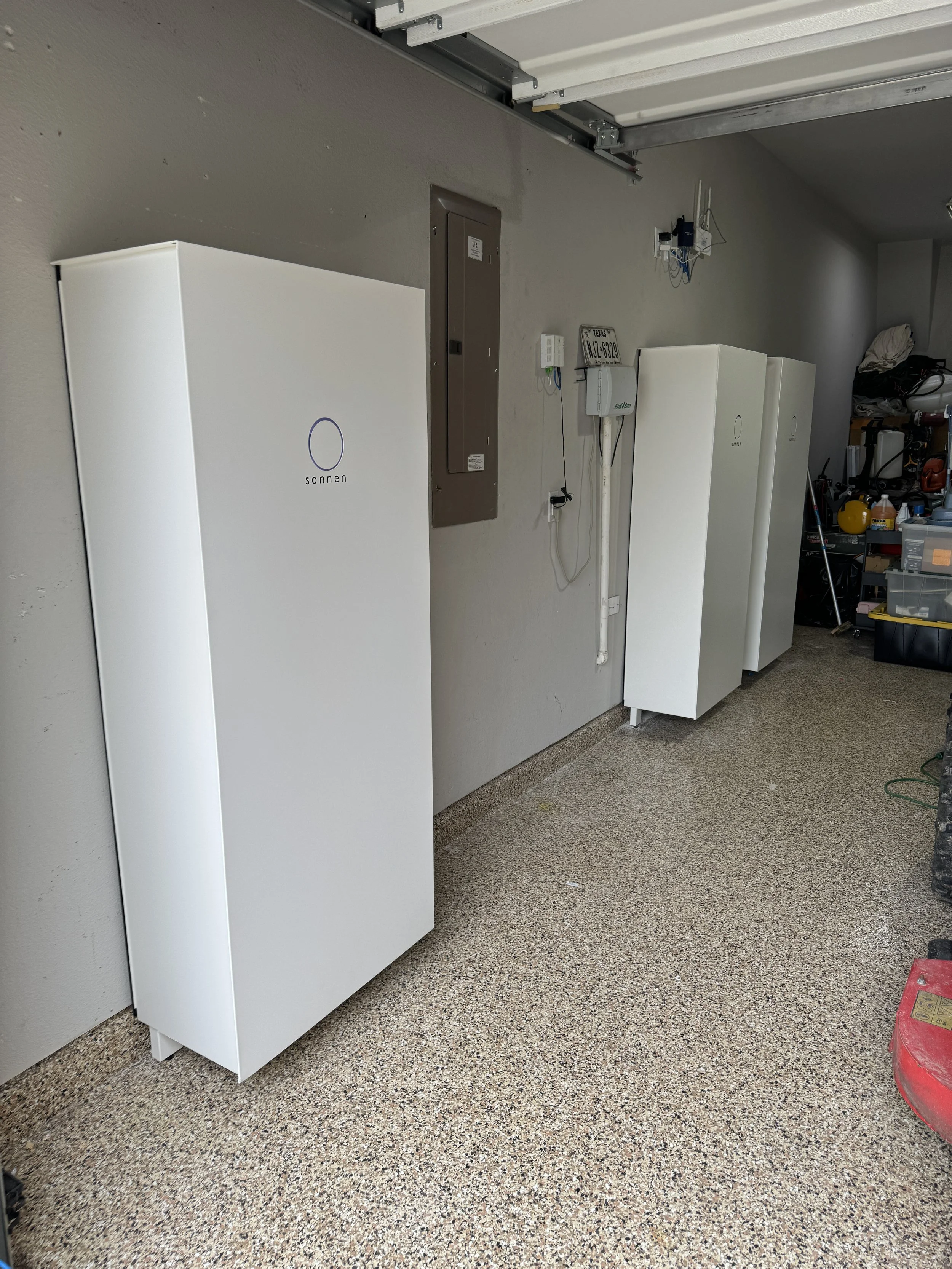
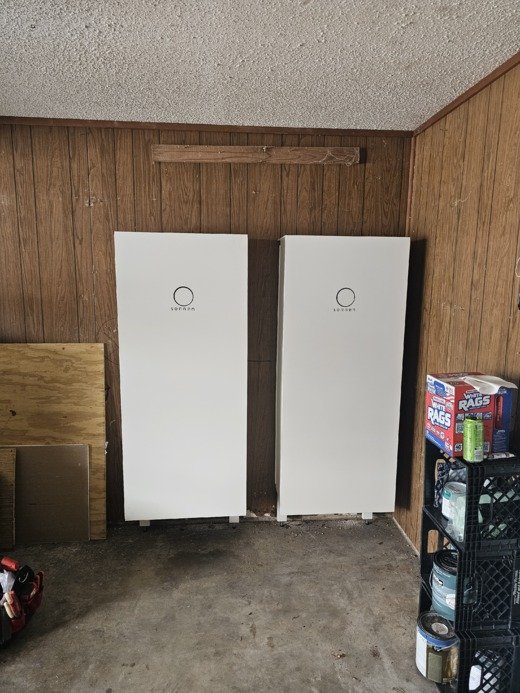
Must have room in a garage for batteries. Most homes will have 3 batteries which take up about 9 feet of wall space.
Roof needs to have 10 years remaining expected life
Manufactured homes okay (but must have garage)
Metal roofs okay
Residential properties/meters only. No commercial
Generators okay, customers will choose which loads are backed up on the battery vs generator
No add-on systems
No ground mounts
No, you can’t build a shed for the batteries
Duracell batteries can be installed outside for Battery VPA projects where Sonnen can’t fit in the garage. -
Homeowner must have 600+ credit with either Transunion or Equifax.
No co-signers. Single signer must either be on title or legal spouse of person on title (with marriage certificate uploaded)
LLC, Trust, etc approved with document uploaded showing that contract signer is owner/executor of Trust or LLC
-
Battery VPA can work with or without existing solar. But not all existing solar systems are compatible. Please do not sell a Battery VPA in the following scenarios:
Existing system is on a Lease or PPA
Existing system already has a battery
Existing system is using a hybrid inverter (i.e. Solis, SolArk, Fortress)
Existing system is over 19.2kw AC (around 60 panels depending on the model)
Complete Contract Items
-
The name of the customer matches the name on title and is a complete name.
Rejection examples:
❌ Customer name is Franklin Jones, signs contract as Frank Jones
❌ Title says P RODRIGUEZ so rep clicks “Replace” but the full name was Pedro Rodriguez
The customer must sign and initial with their own name. Often browsers have initials or signatures saved from other people who have signed documents.
Rejection examples:
❌ Customer John Smith signs with the initials RG
❌ Customer John Smith signs with signature “Mary Smith”
-
The purpose of the video welcome call is to make sure the customer understands the key terms of the agreement on their own in case they have a dispute or issue with the contract later on. Customer must answer questions verbally and without anyone else talking during the call
Common Rejections:
❌ Someone is talking to the customer during the call, answering questions or telling them what to say
❌ Customer is distracted or not verbally answering the questions so we can’t tell whether they are actually understanding what’s being asked.
-
Customer must connect a valid payment method through Stripe. Credit and debit cards are accepted but will incur an additional $15 charge each month. Customer can switch to ACH at any point during the duration of their term to waive this charge. Please stay in the home or on the phone with the customer until you can see that an account or card has been successfully linked to SOLRITE.
Common rejection
❌ Customer stops the stripe process on the “Success” screen that says the account was connected to stripe, before they click “Return to SOLRITE” to connect that account to their Solrite billing profile.
-
We need a full utility bill that includes the following:
Account number
ESIID
Meter Number
Customer name and address
Usage
For Battery VPA deals, we also need the contract for the existing system to verify system ownership and existing system information
Common rejections:
❌ Only one page or partial bill uploaded
❌ Link or blurry photo uploaded rather than full pdf
How does a VPP actually work?
Levels of a real VPP
-
Extra solar power during the day is worthless to the grid and often times is run into the ground because there is too much power for the grid to handle. This is why net metering plans are all starting to go away and eventually disappear in every single utility as solar adoption grows.
The first and most basic use of the batteries is to capture the excess energy from the solar system during the day so it doesn’t go back to the grid. This already helps the grid to not have to intake too much power during the day.
-
The most expensive time of the day for energy is in the afternoon evening hours. Since your home will have excess daytime solar energy stored in the batteries, your home can use this energy in the evening, freeing up more of that peak energy for other homes. This helps utilities better manage their production.
-
With a 60kwh reservoir, your solar system will rarely completely charge the batteries. This leaves additional reservoir that we can flex for the VPP. We will charge the remainder of the battery from the grid when power is cheapest. Then. if your home ends up needing more power than the solar produced on any given day, you will be able to use the power from your batteries instead of having to buy power from your retailer at peak prices. This is what allows our retail partners to give you a discounted rate on your energy costs. Any power you don’t use can be sold back to the grid when power prices are higher, helping the retailer generate additional revenues. We credit you back for any power that is sold to the grid
-
The SonnenConnect VPP is capable of over a dozen additional grid services that will help support the grid and generate additional revenue for retailers. These services are things that will be barely noticeable at the home because they are quick dispatches (30 seconds - 5 minutes) and mostly focused on electrical signals rather than simply draining the reservoir. These services are only possible with sonnen’s advanced engineering and what constitutes a “real VPP”
A real VPP is not…
❌ Draining your batteries into the grid for hours every day
❌ SOLRITE trading on the market with energy you paid for (through solar or grid charging) and pocketing the profits without crediting the customer
❌ Draining batteries before or during a blackout
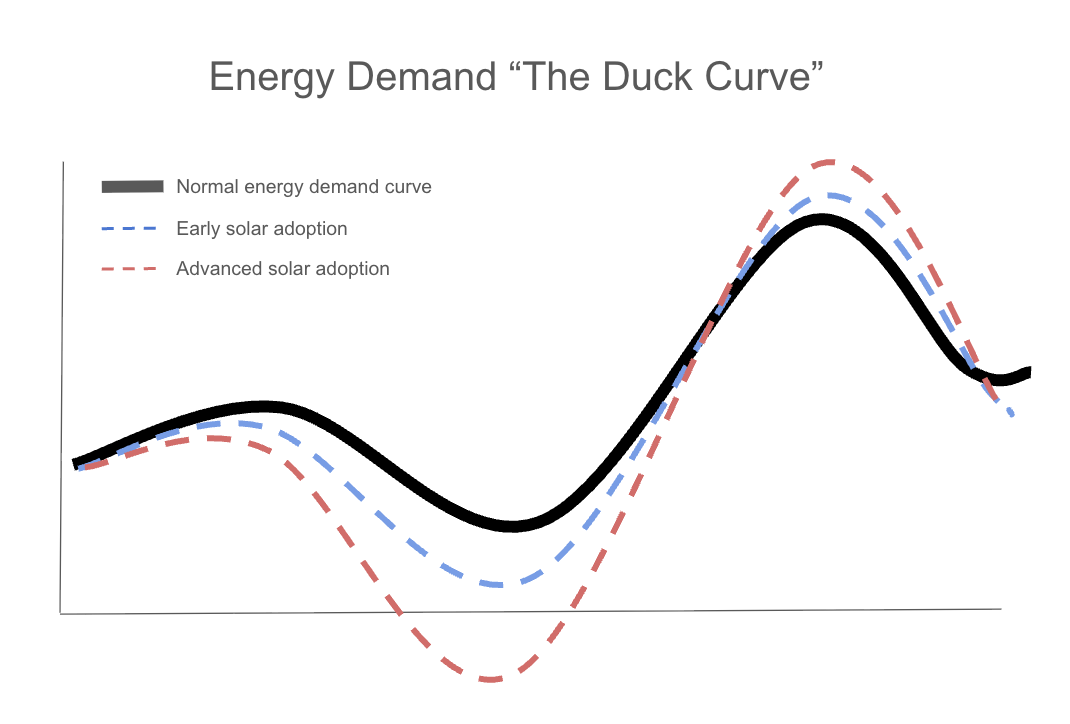
As solar adoption grows in any market, eventually too much power is produced in the middle of the day. In addition, the utility has to fire up peaking plants to go from the extreme “belly of the duck” to to top of peak demand in the evening.
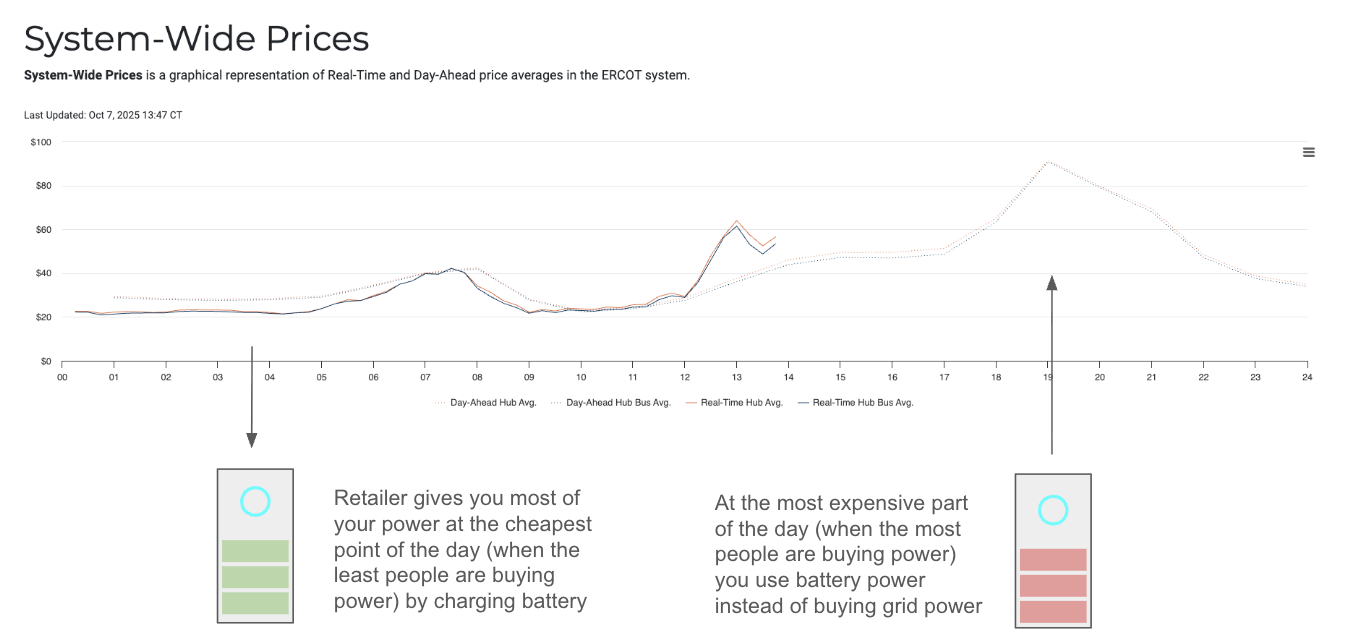
Retailers can use additional reservoir in the batteries to buy power when grid prices are low. This will primarily serve to provide your home with retail power at a cheaper rate but any unused power can be sold back to the grid when prices are higher.
120% Max Offset Best Practices
Get full 12-month usage from Smart Meter Texas. Your offset will be validated based on matching the month on the uploaded bill. But projections will be more accurate with full 12 month usage
Match system to needs. While we do allow up to 120% offset, the additional production is not needed when homes have the right size batteries for a VPP. For the purposes of the VPP, lower offset is more efficient.
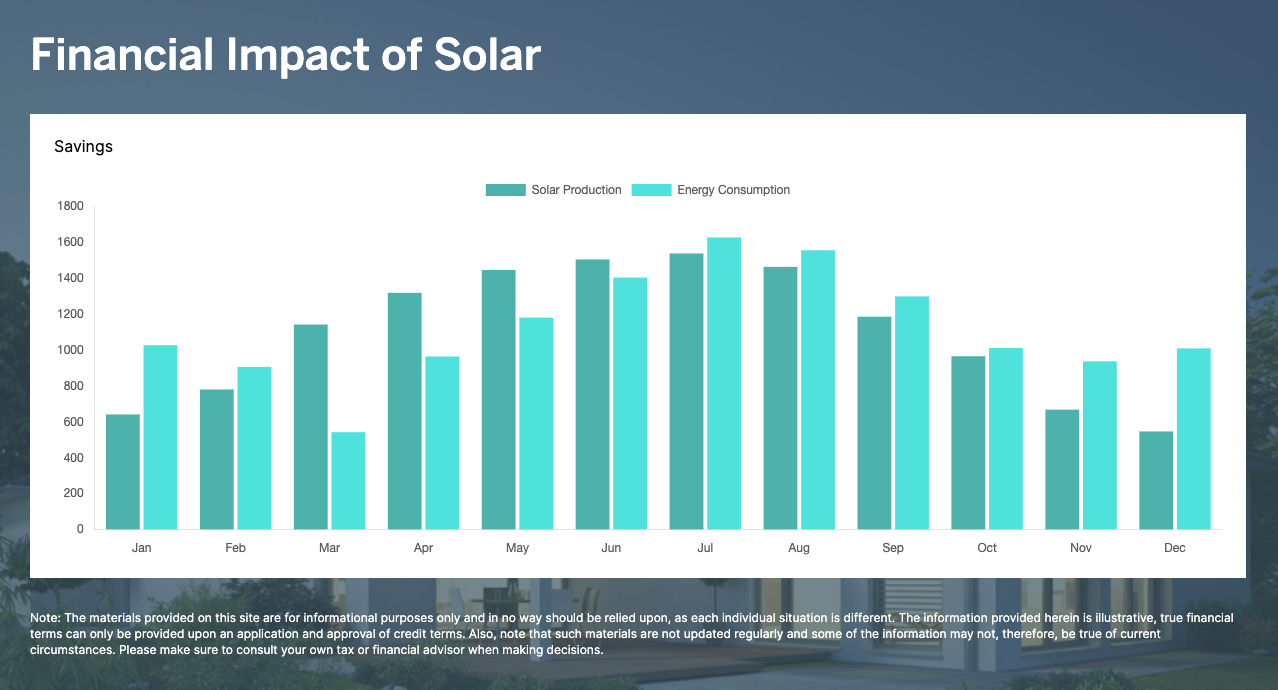
Do not promise “No more bills”. The offset percentage is based on annual production numbers not monthly. Even when a system may fully offset a homes usage annually, their monthly bills with the REP will still fluctuate. Most people will still have small bills several months of the year if not every month.
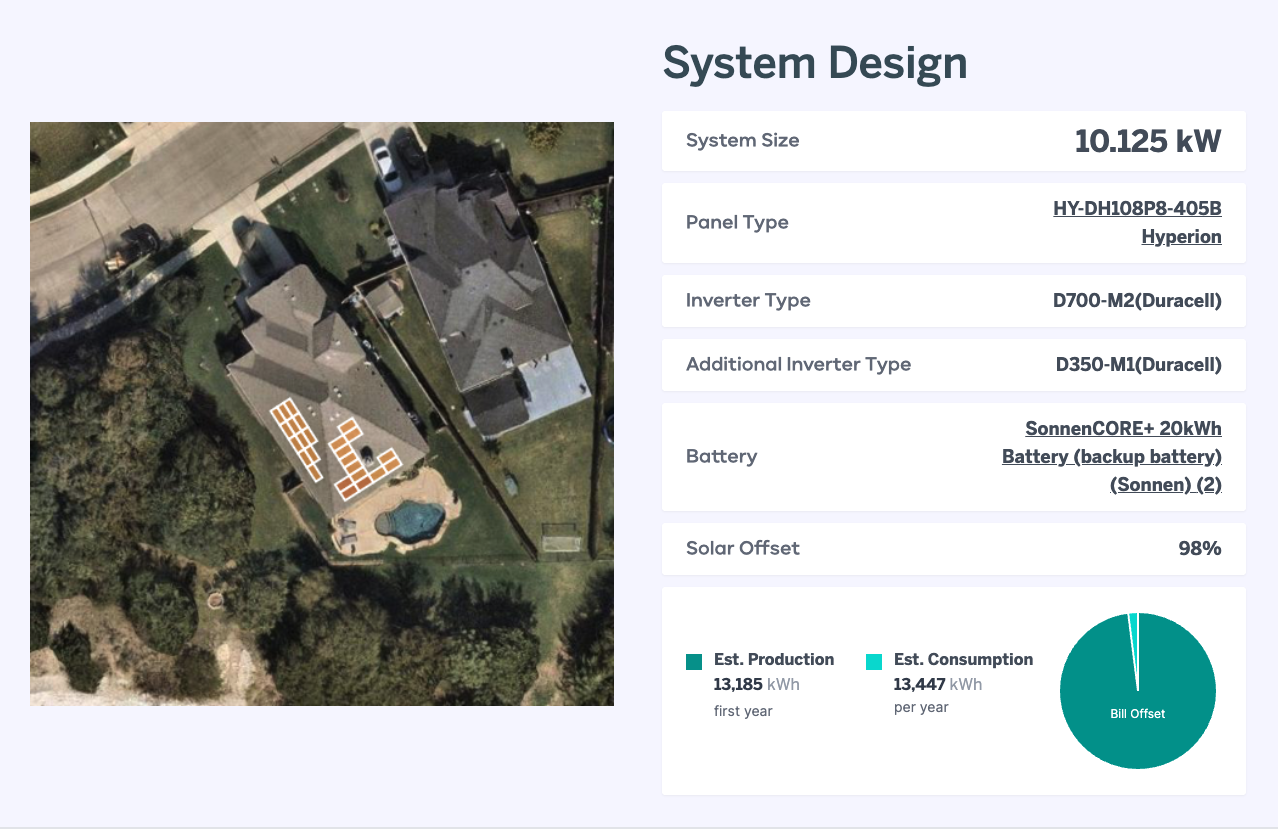
See the included example with 98% annual offset where some months (Mar, Apr, May) will overproduce and others (Nov, Dec, Jan) will underproduce.
When setting expectations with your customers please help them understand that their utility bills will vary month to month based on how much power they are using. Setting proper expectations ahead of time will help avoid frustrations down the road when they start getting their utility bills.
Note that homes that use electric heat (North Texas areas like DFW) will experience high utility bills in the winter when there is less solar production and higher home usage. Homes in Houston area will more likely see excess usage in the summer.
Monitoring Examples
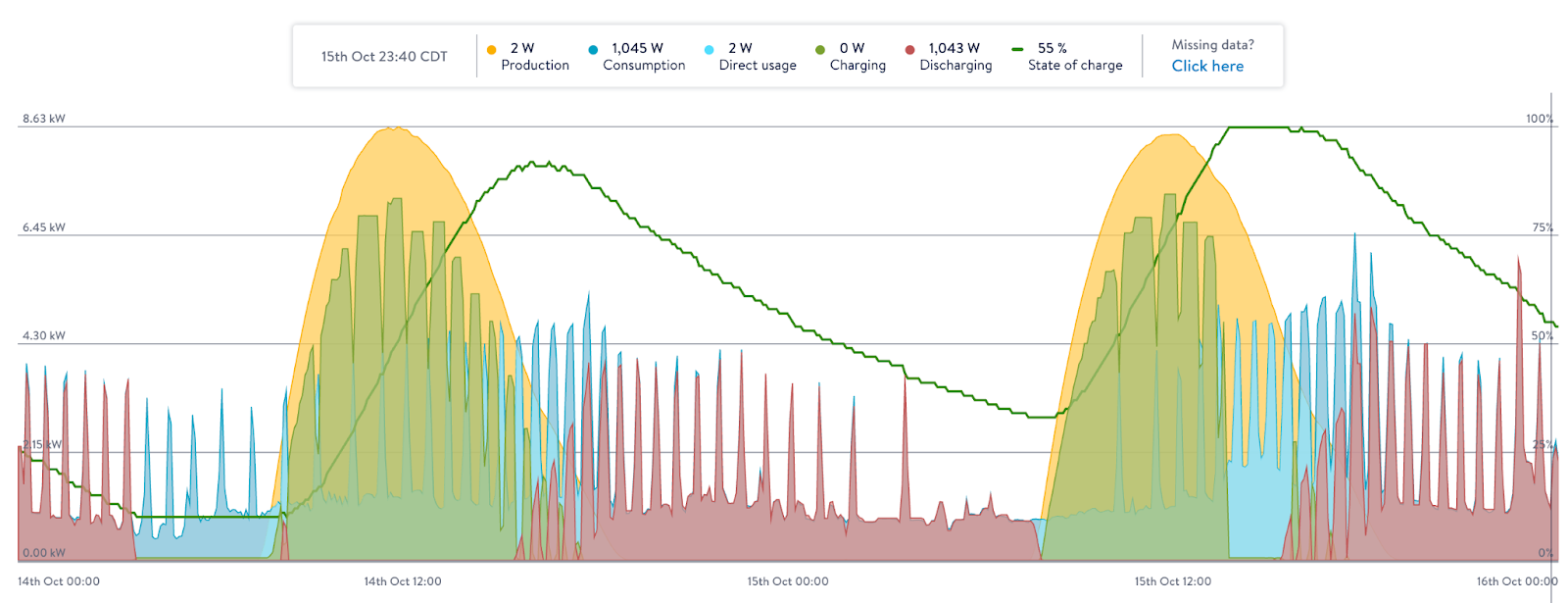
In this example, usage was very low during the day so the battery went from 10% to fully charged before the sun went down. With higher night time usage, the battery only made it until about midnight. The next day the sun was not as strong, but still enough to almost fully charge the battery and get through most of the night.
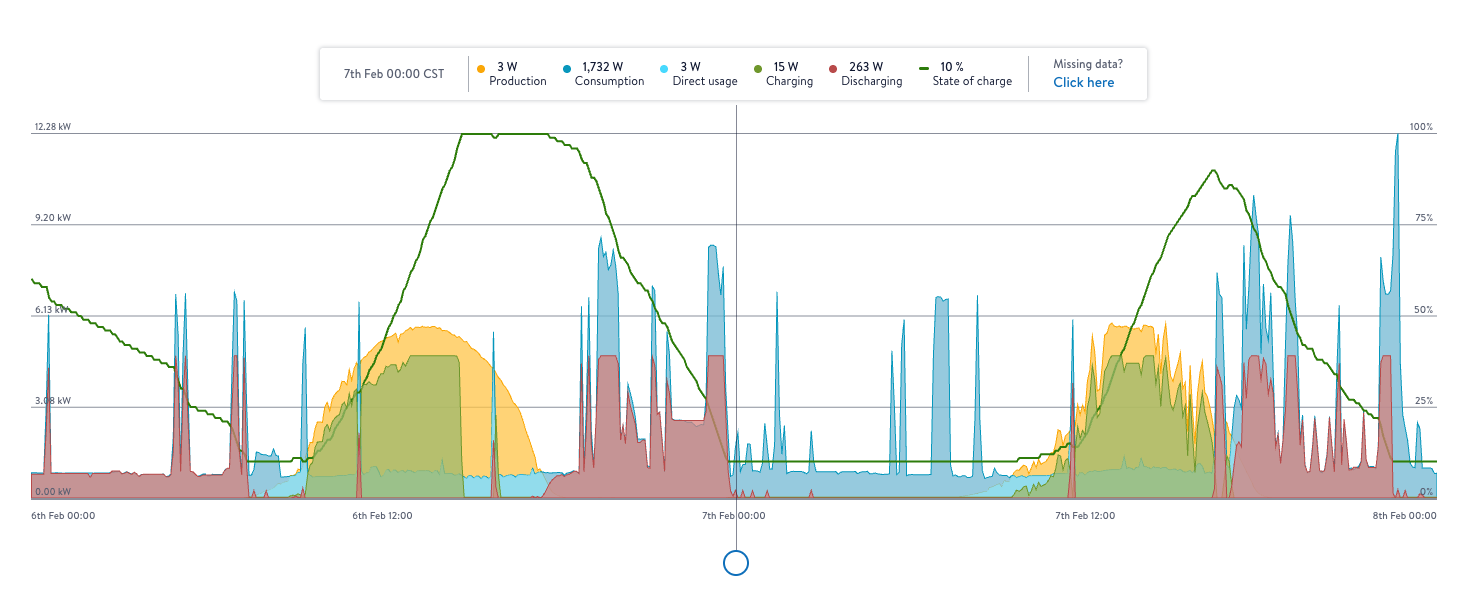
In this example, the battery was already at 10% minimum before the sun came up. The solar did not fully charge the battery but it was enough to get through the whole night and still had some juice by the time the sun came up. The next day the battery filled up completely before the sun went down.
Battery backup included
Explain that batteries are included in the price, not free. The cost of the batteries is covered by tax credit and utility company payments from participation in the VPP. These batteries are fully owned and actively managed in the VPP, and we are able to capitalize more on their use when we fully control the battery. This means that we control the backup reserve percentages, emergency backup mode for storms etc. and the customer will not be altering settings.
Explain that the backup provided by the batteries is for essential loads, not whole home backup. Whole home backup is very difficult and rarely delivered as hoped. Anything with large draw (i.e. HVAC systems and electric heaters) not only risk overloading the battery but will also drain it very quickly and leave the rest of the home without power in the event of a prolonged outage. Homes are better off not attaching these loads to their backup battery and using the outlets to plug in fans or heaters that use less power but can still provide some limited temperature control in the home. This way, the essentials like lights, refrigerators, etc. can continue running as long as they need to for the grid to come back online.
2.9% Escalator
Explain that the monthly price will increase by 2.9% each year. This is not a conditional increase, it will happen every year. The purpose of the escalator is to allow our prices to start out much lower and then keep up with inflation rather than a much higher fixed rate. You can highlight the fact that the increase is capped and known, and your customer will never have to worry about the price increasing by more than 2.9% each year even if retail rates surge 10% or higher.
SOLRITE-approved Retail Electric Provider (REP)
SOLRITE customers will connect with an approved retail partner for a discounted rate on their retail energy. These contracts will only last 1-3 years like all retail contracts. That means we can’t lock in the price. Our retail partners will always be able to use the batteries to lower their cost and increase their revenues, so they will always be able to offer our customers a lower rate than the market average. This is a much better situation than net metering, buyback, or free nights plans that are all a loss for the retailer and will not be around after the next couple years.
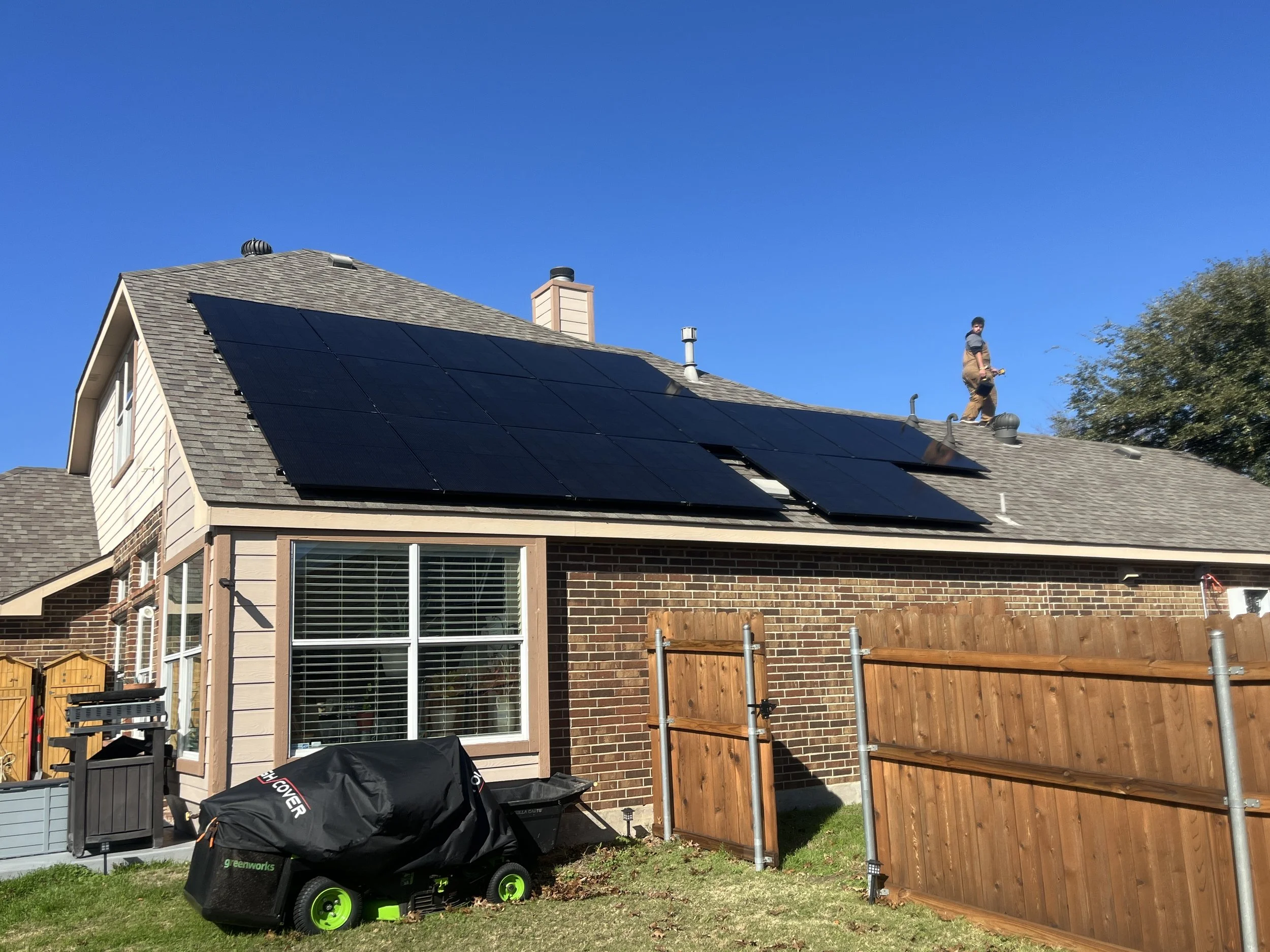
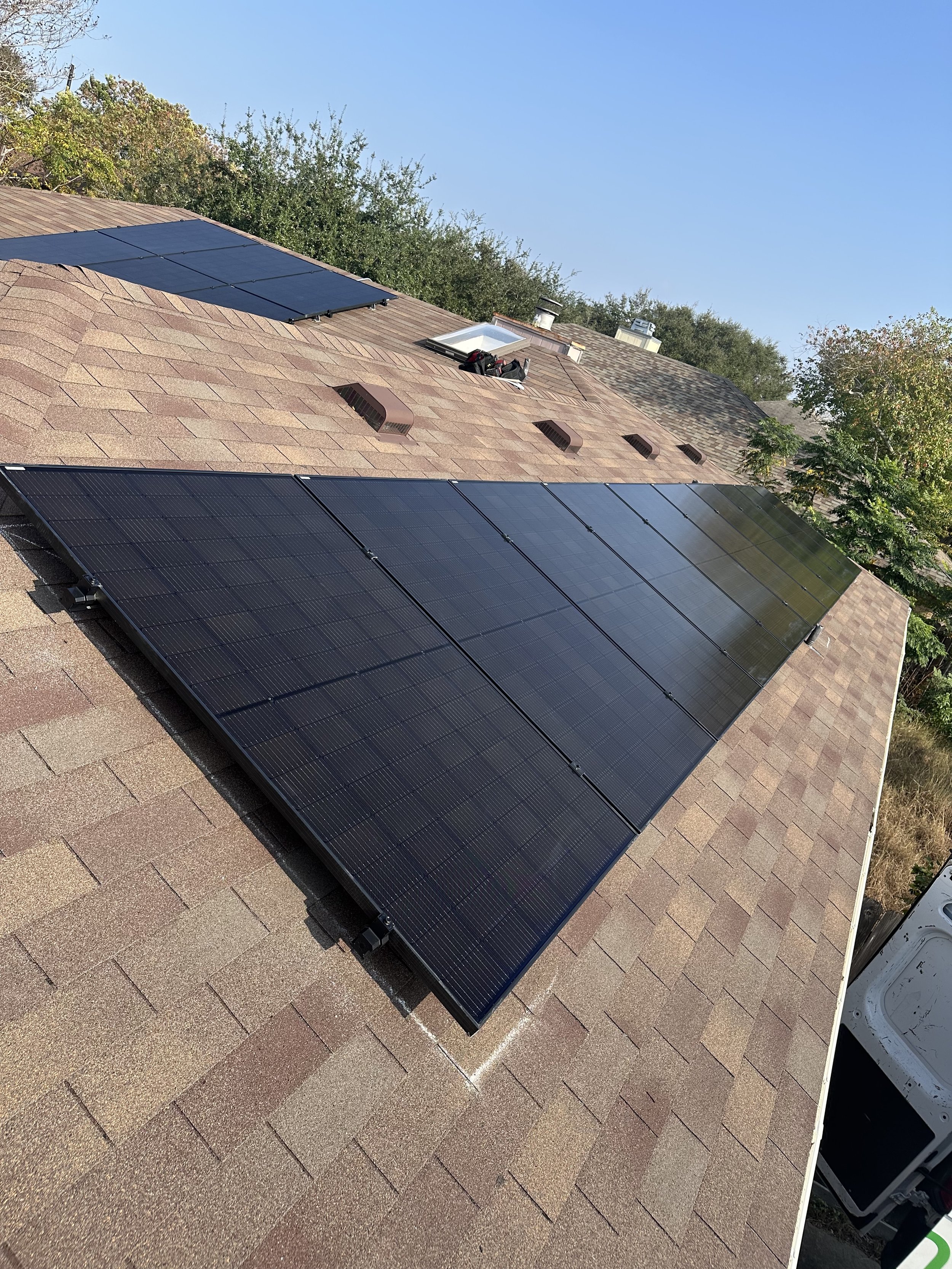
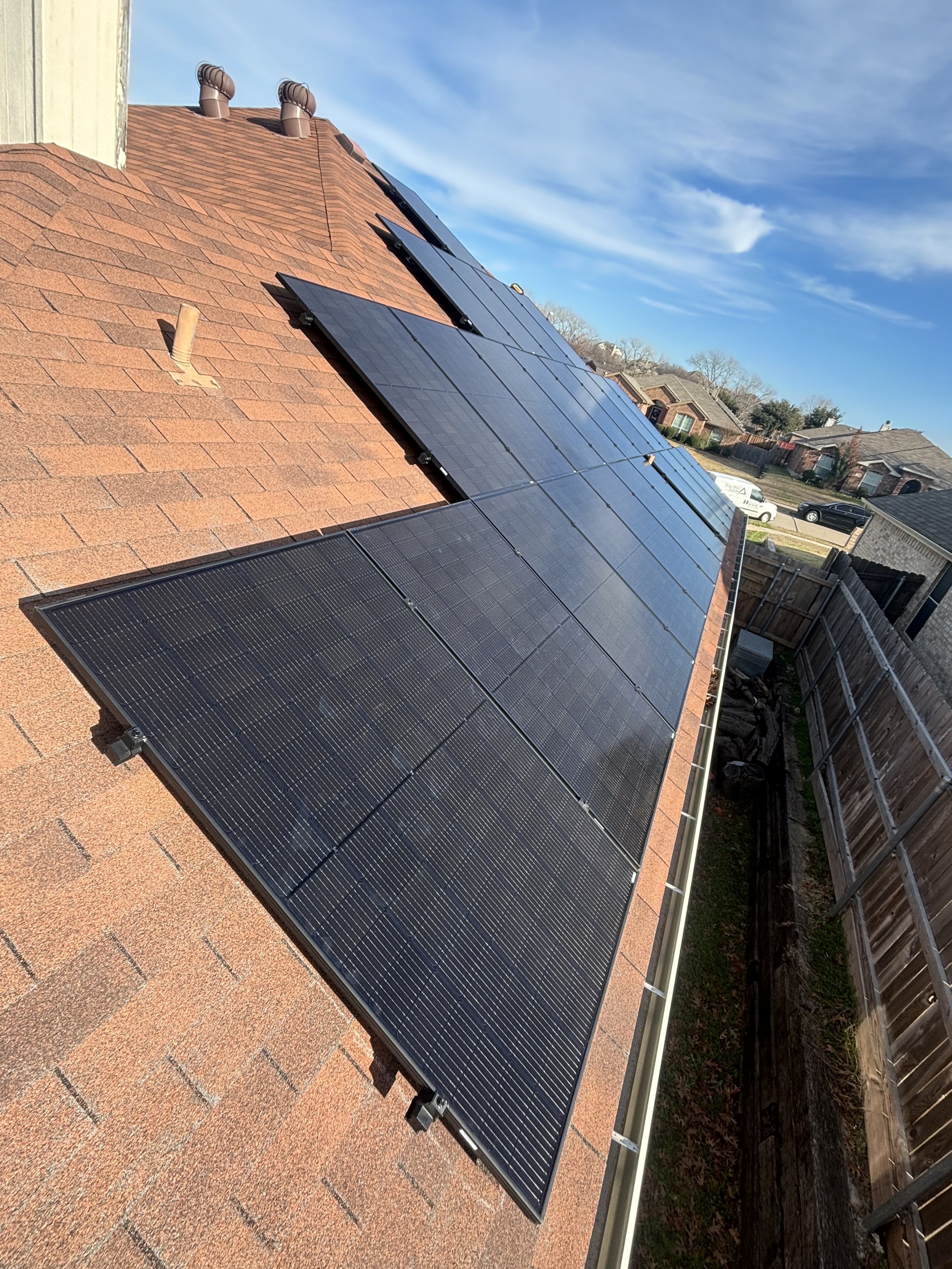
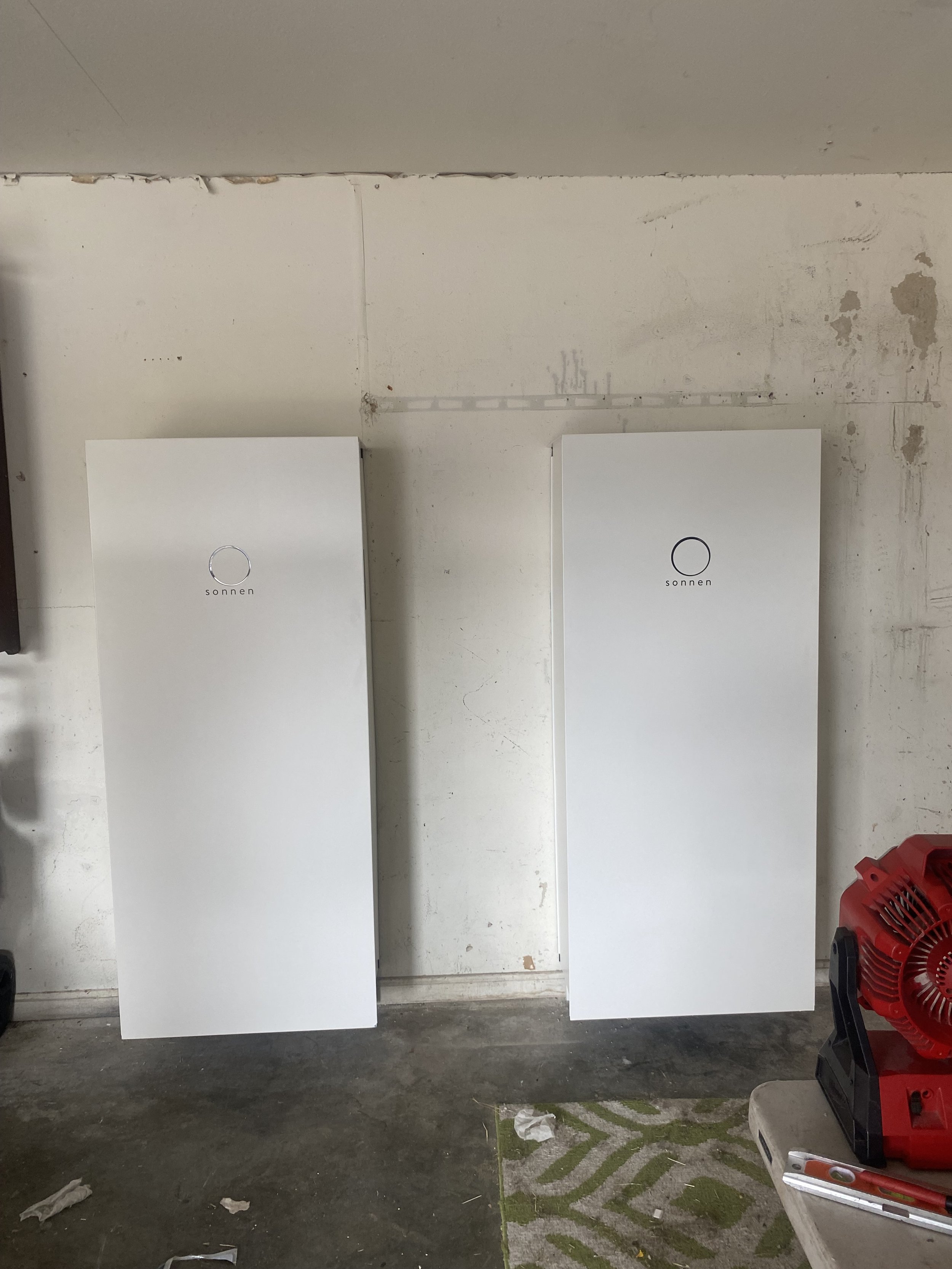
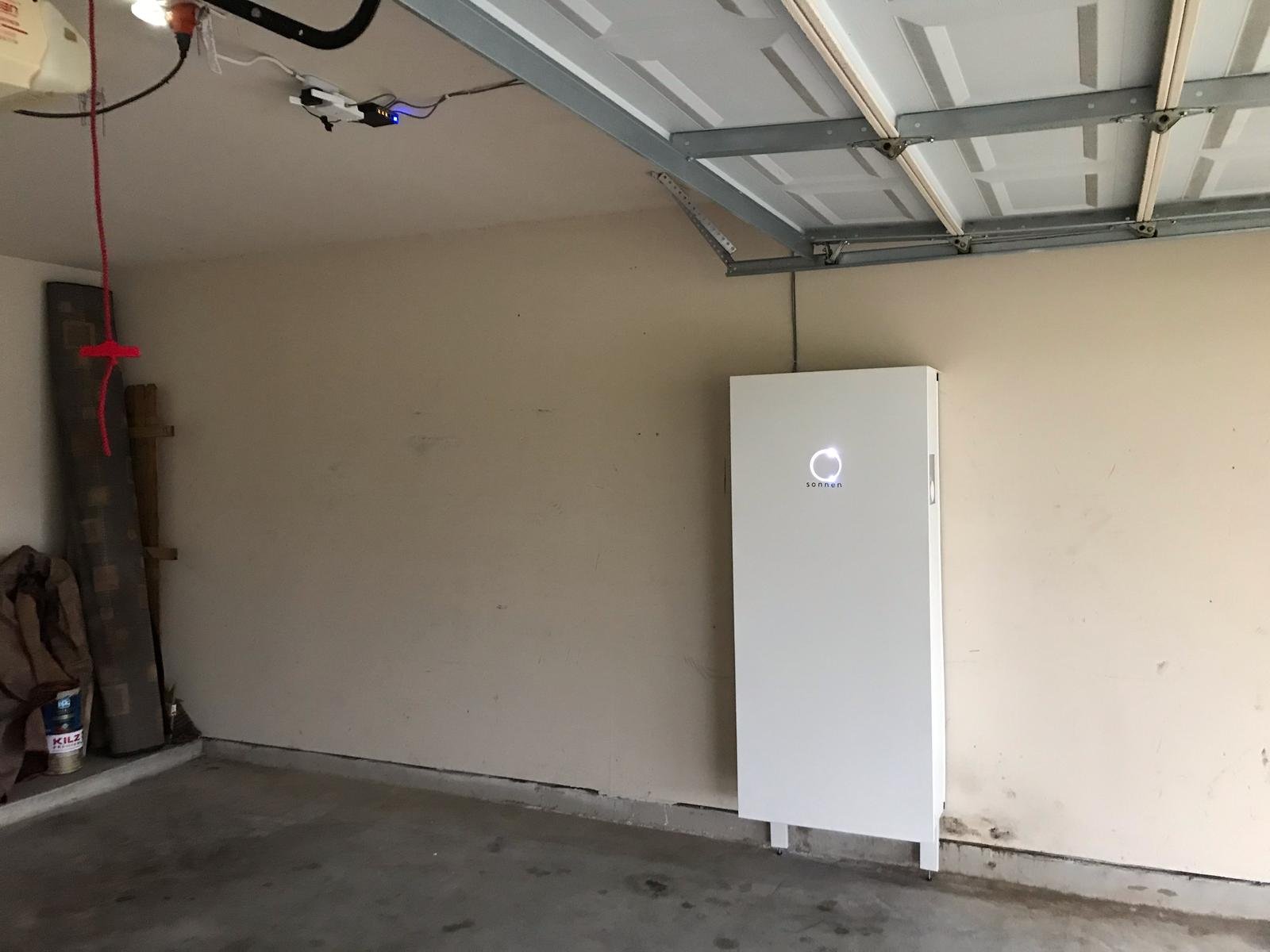
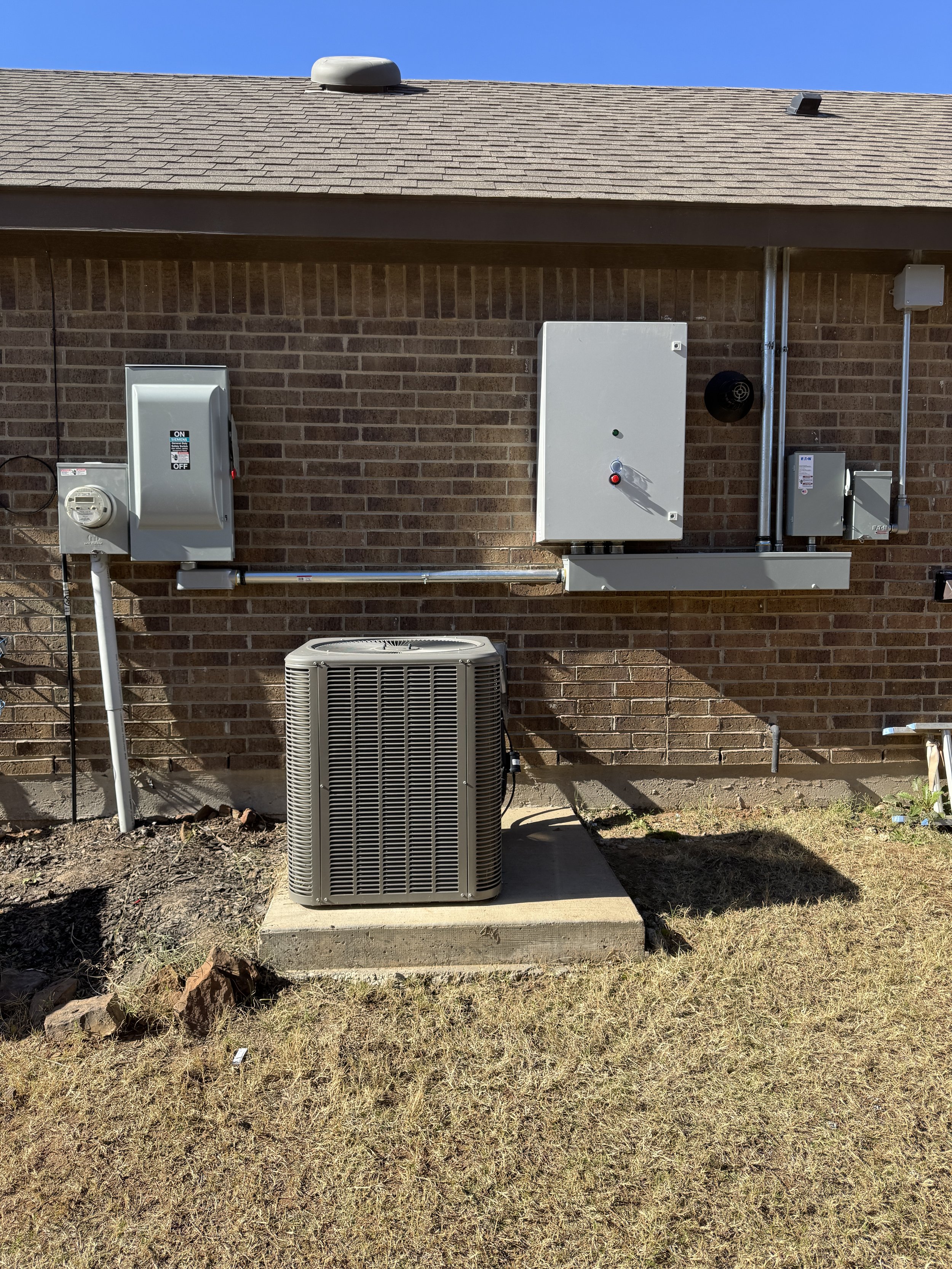
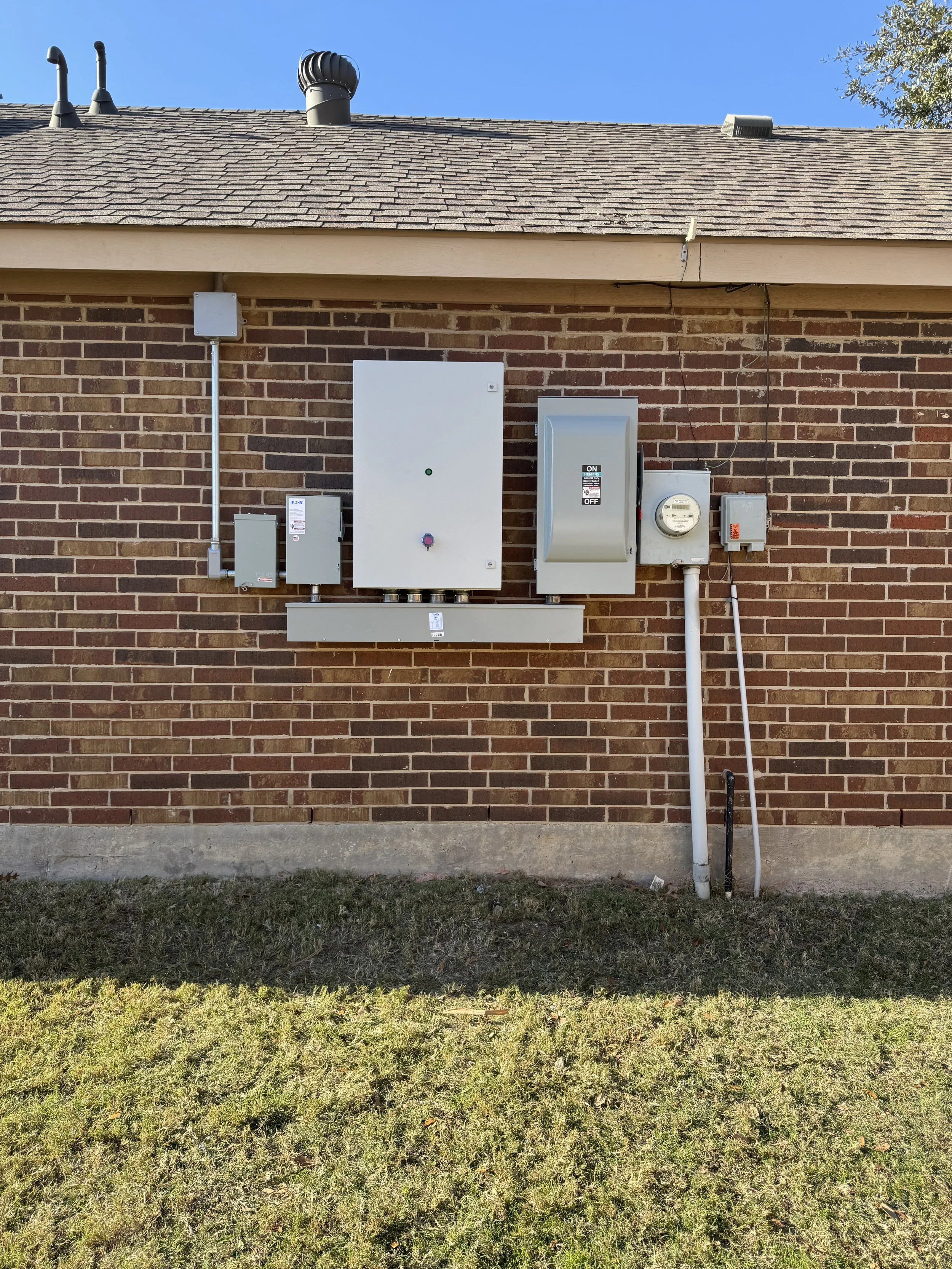
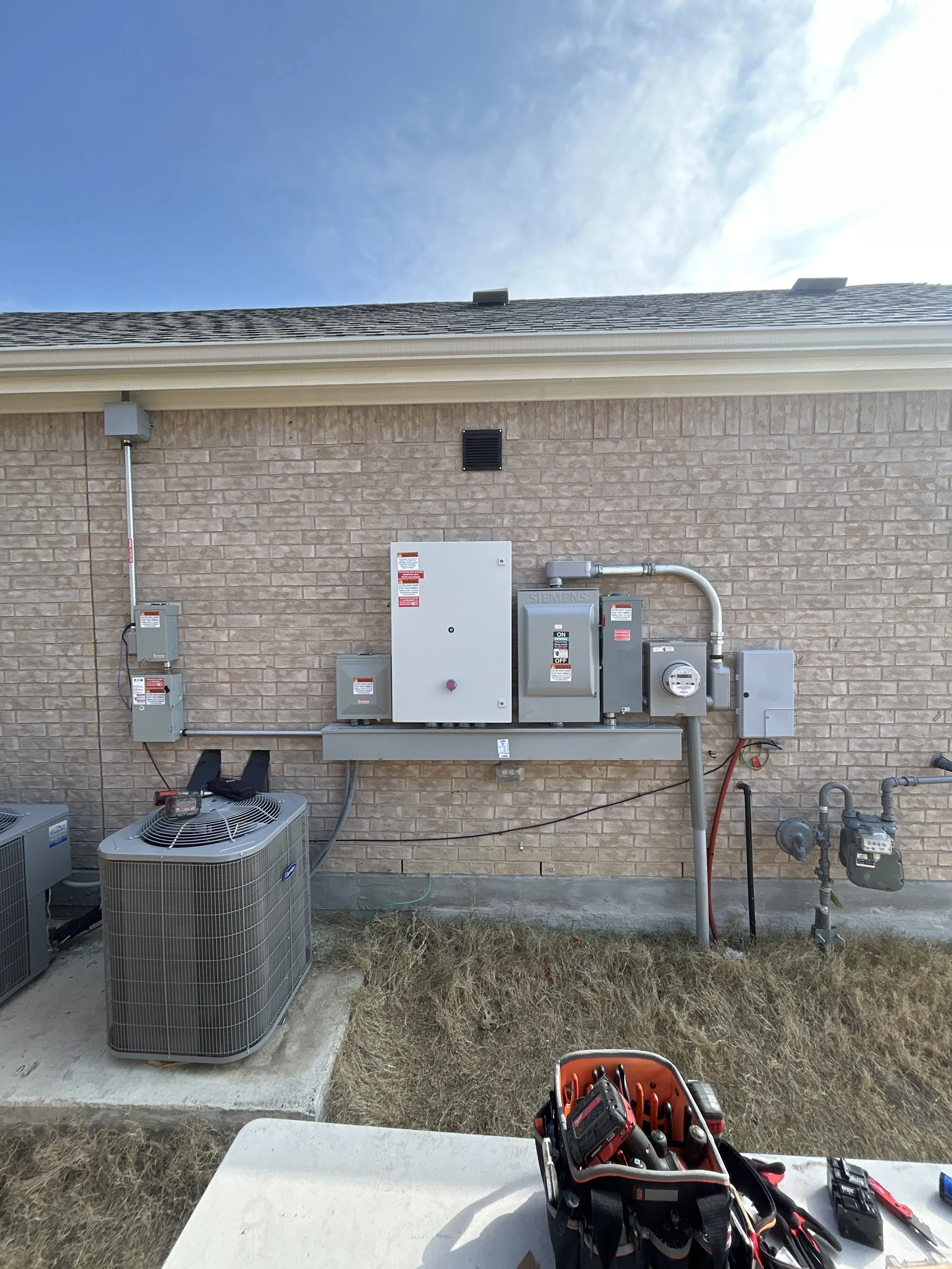
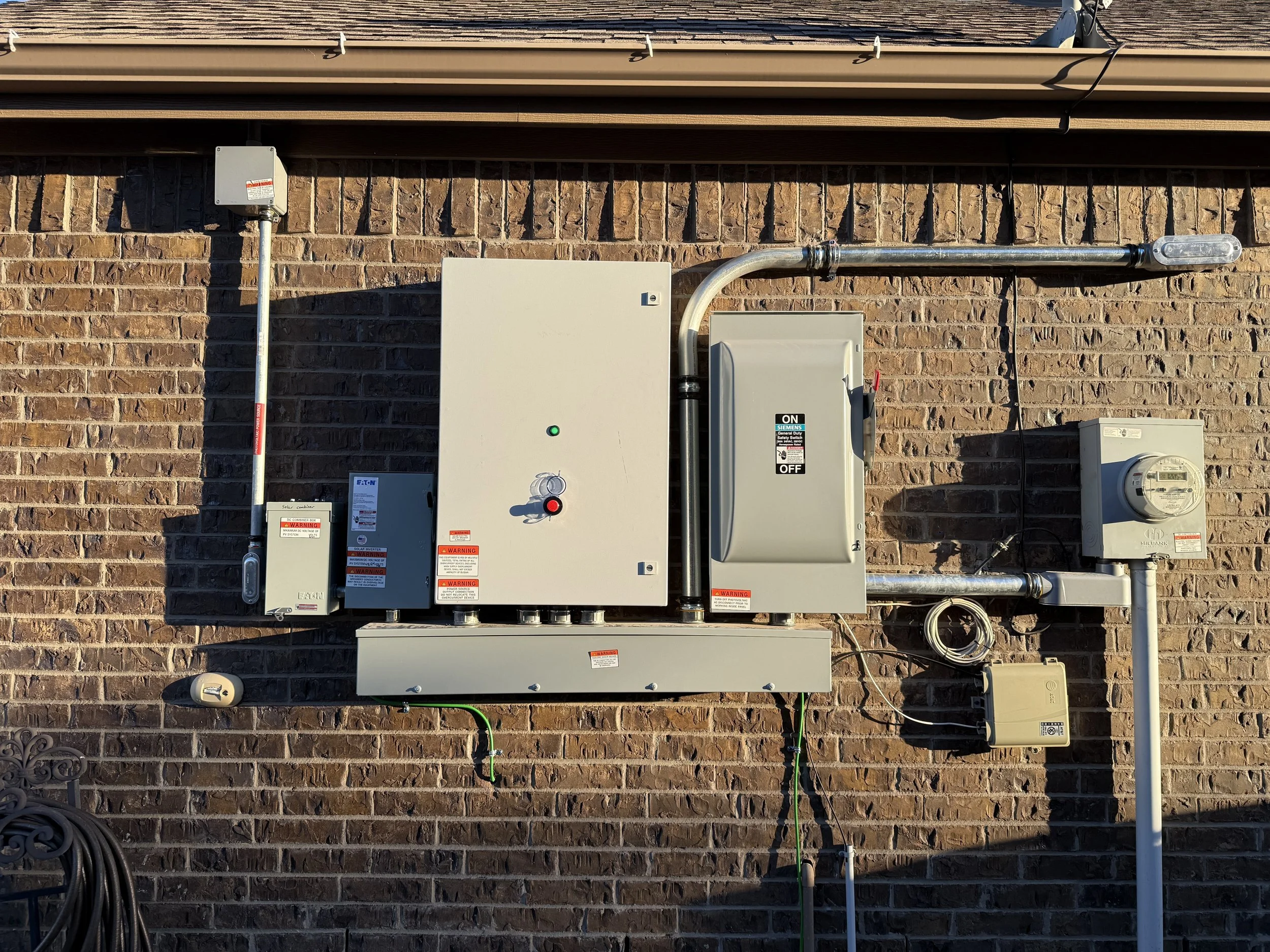
Sample Install Photos







Frequently Asked Questions
-
ENERGY COMMUNITIES
6-9 kw = 2 Batteries
9-26kw = 3 BatteriesNON-ENERGY COMMUNITIES
6-12kw = 2 Batteries
12-26kw = 3 Batteries -
Yes we CAN work with generators!
Customers will choose which loads are backed up by the batteries and which loads are backed up by the generator. Generator-backed loads will be moved into a separate panel at install.
The generator won’t power battery loads and the battery won’t power generator loads. The generator also will not charge the battery